Beyond the Headlines: Unveiling the Uncomfortable Truths in Global Finance.
Hello, this is TBJ.
Today, we confront the elephant in the room that central bankers are desperate to ignore: the slow-motion collapse of the Commercial Real Estate (CRE) market. While the stock market cheers for a “soft landing,” the bond market tells a darker story. A massive wall of debt is maturing in an environment of permanently higher interest rates, and the regional banks holding these toxic assets are running out of runway. This is not just a landlord’s problem; it is the catalyst for the next liquidity crisis.

The Silent Crash: Vacancy Rates and Valuation Collapse
The narrative of “Return to Office” has largely failed. We are witnessing a structural shift in how space is utilized, yet asset valuations have not fully corrected to reflect this new reality.
Why: The Refinancing Wall of 2024-2025
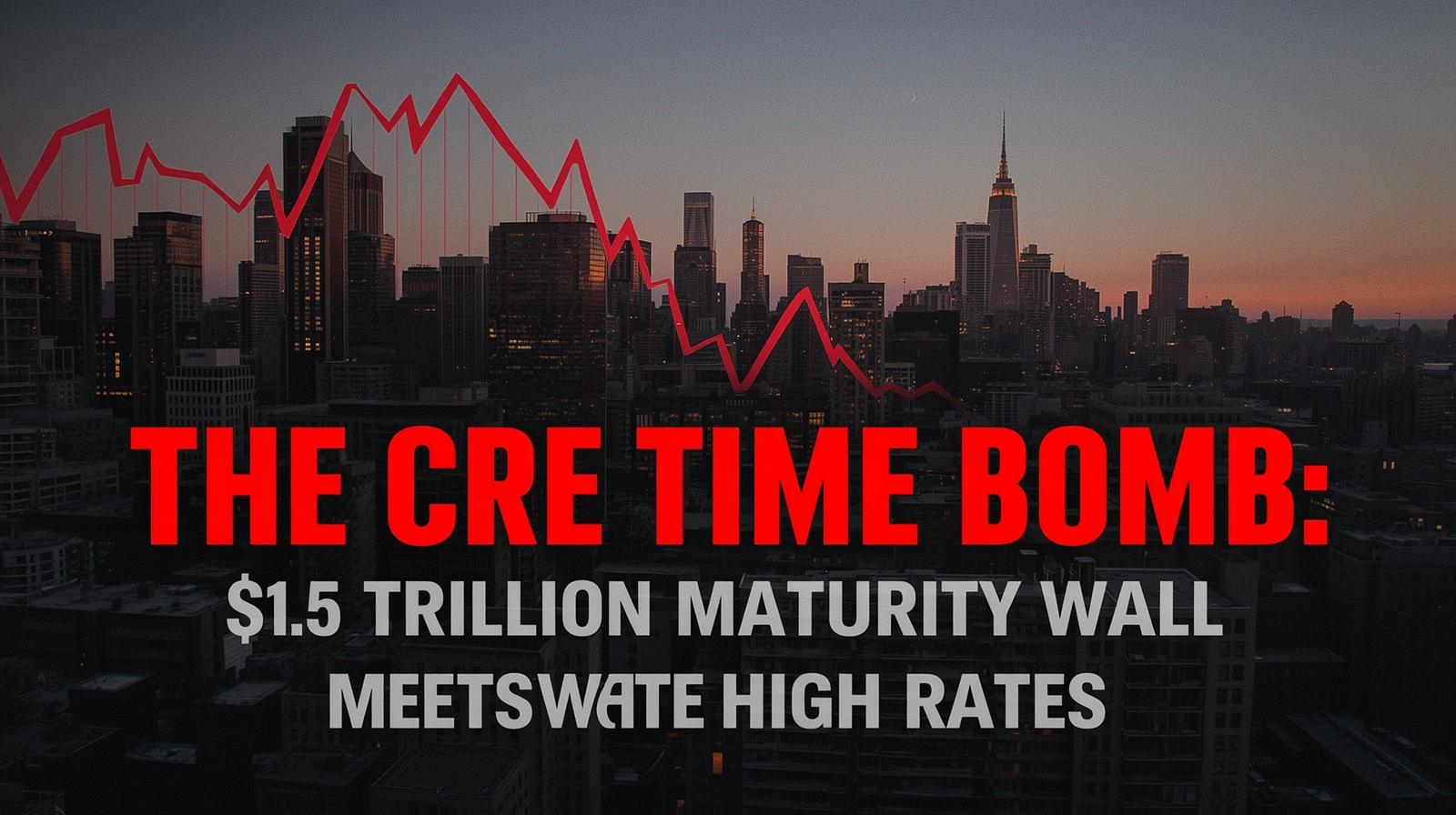
The core of the crisis is the “Maturity Wall.” Over $1.5 trillion in commercial real estate debt is set to mature by the end of 2025.
- The Rate Shock: These loans were originated when interest rates were near zero. Borrowers are now facing refinancing rates that have doubled or tripled.
- The Valuation Gap: At current capitalization rates (Cap Rates), many office buildings are worth less than the debt secured against them. This leaves borrowers with two choices: inject massive amounts of fresh equity or hand the keys back to the bank.
The Doom Loop: Regional Banks in the Crosshairs
This is where the real systemic risk lies. Unlike the 2008 crisis, which was centered on residential mortgages held by global mega-banks, the CRE exposure is heavily concentrated in US Regional Banks.
- Exposure Concentration: Small and mid-sized banks hold nearly 70% of all CRE loans. Their balance sheets are disproportionately exposed to the asset class with the worst fundamentals: urban office space.
- The Liquidity Trap: As defaults rise, these banks must increase capital reserves, which restricts their ability to lend. This credit contraction further depresses property values, creating a self-reinforcing “doom loop” that threatens the solvency of the banking system itself.
The Reality Check: ‘Extend and Pretend’ Has Expired
For the past two years, lenders have engaged in a strategy of “Extend and Pretend”—modifying loan terms to avoid recognizing losses. However, regulators are tightening scrutiny, and the higher-for-longer rate environment makes this strategy mathematically impossible to sustain. We are entering the phase of “Capitulation,” where losses must finally be realized.
Strategic Takeaway: Preparing for the Fallout
The unraveling of the CRE market will not be an overnight event but a persistent drag on the economy.
- Avoid Regional Banking Stocks: The sector faces years of earnings compression and potential failures. The risk-reward ratio remains highly unfavorable.
- Opportunity in Distress: For accredited investors, the coming years will offer generational opportunities to acquire high-quality assets at distressed prices. Cash is king; patience is the strategy.
- Watch the Spreads: Monitor the spread between CMBS (Commercial Mortgage-Backed Securities) and Treasuries. A widening spread is the canary in the coal mine for broader financial contagion.
The market often mistakes a delayed reaction for safety. The fuse on the commercial real estate bomb has been lit; the length of the fuse is the only uncertainty. Prudent investors should position themselves for the inevitable repricing.
-TBJ-