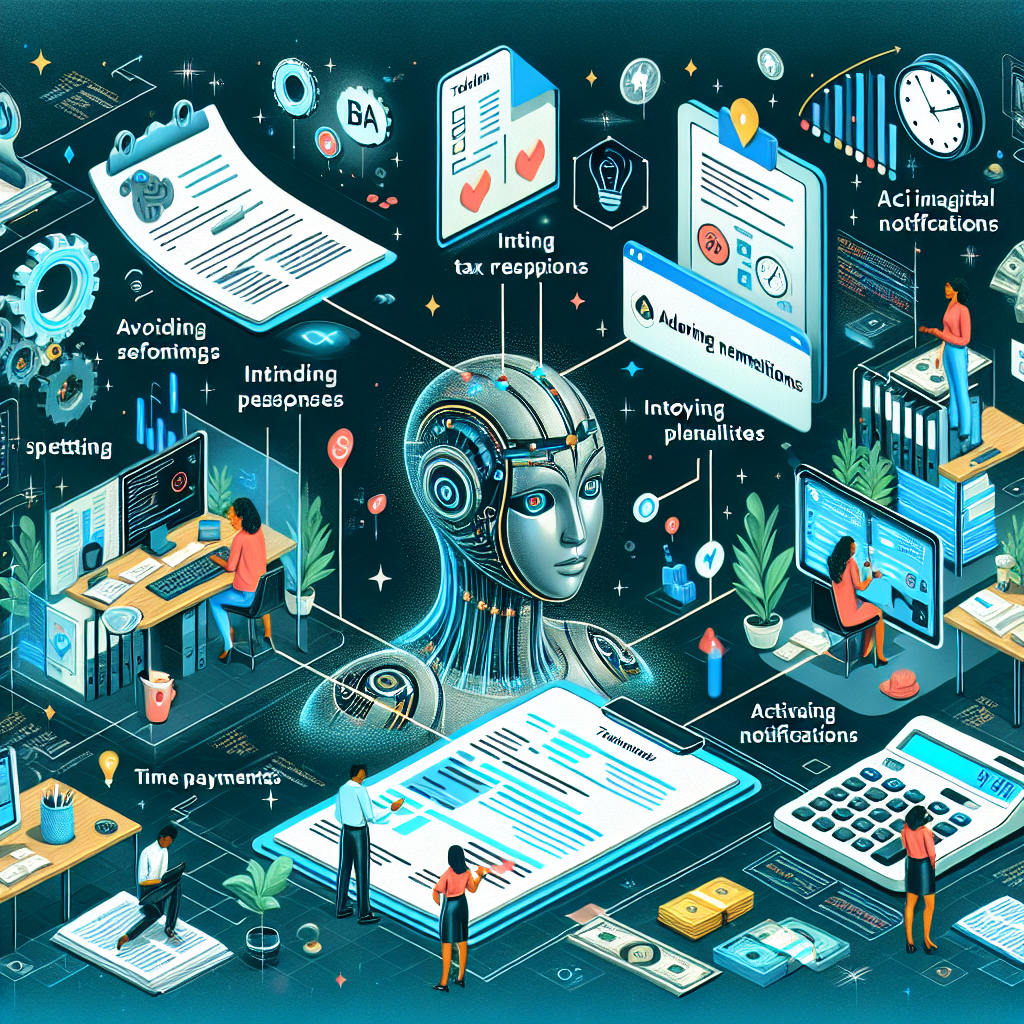
How to Set Up AI-Driven Tax Notifications and Avoid Penalties
In the complex world of taxation, staying informed about deadlines, filing requirements, and changes in tax laws can be overwhelming. However, advancements in artificial intelligence (AI) have opened new avenues for tax management, allowing taxpayers and business owners to automate their tax notifications effectively. This guide provides step-by-step instructions on how to set up AI-driven tax notifications, ensuring you remain compliant and avoid costly penalties.
Table of Contents
- Understanding AI in Taxation
- Benefits of AI-Driven Tax Notifications
- Setting Up Your AI-Driven Tax Notification System
- Choosing the Right AI Tool
- Configuring Notifications
- Integrating with Existing Systems
- Testing Your Notification System
- Maintaining Your AI-Driven System
- Conclusion
Deep Dive Guide: How to Set Up AI-Driven Tax Notifications and Avoid Penalties
This guide will provide a comprehensive pathway for setting up AI-driven tax notifications. By implementing this strategy, you’ll become adept at managing your tax obligations, ensuring timely filings, and avoiding penalties due to missed deadlines. Understanding and utilizing AI tools can significantly streamline your tax processes.
Table of Contents
- Understanding AI and Tax Notifications
- Selecting the Right AI Tools
- Setting Up Your AI-Driven Notification System
- Maximizing the Efficacy of Your Notifications
- Best Practices for Compliance
- Conclusion and Next Steps
Understanding AI and Tax Notifications
AI has become an invaluable tool in personal finance and tax management. By utilizing data patterns, AI can help predict tax deadlines, flag potential issues, and keep you updated on tax law changes. With an AI-driven tax notification system, you can significantly reduce the risk of missing important tax dates and incurring penalties.
What are Tax Notifications?
- Alerts regarding upcoming tax deadlines.
- Reminder notifications for scheduled payments or filings.
- Updates on law changes that may affect your tax situation.
Why Use AI for Tax Notifications?
- Personalization: AI can tailor notifications based on your financial situation.
- Timeliness: Provides reminders ahead of due dates to ensure compliance.
- Efficiency: Automates repetitive tasks such as tracking changes in tax law.
Selecting the Right AI Tools
Choosing the right AI tools is critical to the success of your tax notification system. Here’s how to approach this decision.
Research Available AI Tools
- Conduct online research to identify AI tax solutions, such as:
- Tax software like TurboTax or H&R Block.
- AI-based financial management applications.
- Email-based notification services.
Criteria for Selection
- Ease of Use: Ensure the software is user-friendly and easy to navigate.
- Customizability: Look for options that allow you to set personalized notifications.
- Integration: Ensure compatibility with other financial tools you use.
- Cost: Benchmark the pricing models to assess budget compatibility.
- Customer Support: Ensure quality customer assistance is available.
Setting Up Your AI-Driven Notification System
Once you have chosen the appropriate tools, it’s time to set up your AI-driven notification system. Follow these steps to ensure everything is correctly configured.
Creating an Account
- Sign up for the selected AI tool, following the steps in the registration process.
- Provide accurate personal and financial information for tailored notifications.
Configuring Notification Preferences
- Access the settings or preferences section of the tool.
- Set up important deadlines:
- Tax return filing dates
- Estimated tax payment dates
- Due dates for additional documentation
- Choose the frequency of notifications:
- Daily, weekly, or monthly alerts
- Immediate notifications for urgent changes
Integrating with Financial Accounts
- If applicable, link your financial accounts to facilitate data syncing.
- Bank accounts for tracking transactions and expenses.
- Investment accounts to monitor taxable events.
Maximizing the Efficacy of Your Notifications
Merely setting up notifications is insufficient; you must actively engage with these alerts. Here’s how:
Regularly Review Alerts
- Establish a routine to check your notifications.
- Daily checks for any urgent items.
- Weekly reviews for upcoming deadlines.
Respond Promptly to Notifications
- Make it a priority to address alerts as soon as they arrive.
- Allocate specific time slots for tax-related tasks.
- Respond to requests for documentation or clarification without delay.
Update Your Preferences as Needed
- Review and update notification settings regularly.
- Adjust reminders as your financial situation evolves.
- Add any new deadlines that become relevant.
Best Practices for Compliance
To fully capitalize on your AI-driven tax notification system, implement these best practices to ensure compliance and avoid penalties:
Document Everything
- Maintain meticulous records of all tax-related documents, including:
- Receipts for deductions and expenses.
- Tax documents received from employers and financial institutions.
Stay Informed on Tax Law Changes
- Subscribe to updates from the IRS or other reputable tax entities.
- Participate in forums and social media groups related to tax matters.
- Regularly check government websites for announcements.
Consider Professional Help
- Evaluate whether hiring a tax professional would be beneficial for your financial situation.
- Consult with a CPA or tax advisor for complex tax situations.
- Use AI tools in conjunction with professional advice for best results.
Conclusion and Next Steps
Setting up an AI-driven tax notification system is a proactive step toward efficient tax management. By understanding the tools available, configuring them to meet your needs, and adhering to best practices, you can ensure you stay compliant and avoid costly penalties.
In the next part of this guide, we will delve deeper into the legal implications of tax notifications, exploring advanced strategies for tax optimization. Stay tuned for more insights and actionable strategies!
This HTML document serves as a deep dive guide for setting up AI-driven tax notifications. It emphasizes practical advice, structured information, and clarity, ensuring it is user-friendly and informative.
How to Set Up AI-Driven Tax Notifications and Avoid Penalties – Part 2
Table of Contents
- Understanding AI-Driven Tax Notifications
- Choosing the Right AI Tools
- Setting Up AI Tax Notifications
- Best Practices for Using AI Tax Notifications
- Troubleshooting Common AI Issues
- Conclusion
Understanding AI-Driven Tax Notifications
In the first part of our guide, we explored the importance of staying informed about tax obligations and the potential penalties for missing deadlines or inaccurate submissions. In this section, we will delve deeper into how to effectively set up AI-driven tax notifications that align with your unique financial situation and prevent any costly mistakes.
The Role of AI in Tax Notifications
Artificial Intelligence (AI) can significantly enhance the way individuals and businesses manage their tax obligations by:
- Data Analysis: AI can process vast amounts of tax-related data and identify patterns that may not be readily apparent.
- Real-Time Alerts: AI systems can provide real-time notifications for important deadlines, changes in tax regulations, or anomalies in your financial reporting.
- Predictive Insights: By analyzing past tax returns and trends, AI can offer insights into potential tax liabilities or credits you might qualify for.
Choosing the Right AI Tools
With a plethora of AI tools available in the market today, selecting the right solution that suits your tax notification needs is crucial. Here are some strategies to help you navigate this process.
Evaluate Your Requirements
Before choosing an AI tool, evaluate your needs based on factors such as:
- Your Business Type: Different tools may cater better to sole proprietors, partnerships, or corporations.
- Volume of Transactions: Identify how many transactions you handle to ensure the AI can manage your scale.
- Specific Tax Regulations: Look for tools that cater to your specific jurisdiction and industry-related tax laws.
Research Available Tools
When researching available AI tools, consider the following:
- Reputation and Reviews: Check user reviews and industry ratings to gauge the effectiveness of the tool.
- Integrations: Ensure the tool integrates seamlessly with your existing accounting software.
- Customer Support: Look for tools that offer reliable customer service for troubleshooting and guidance.
Setting Up AI Tax Notifications
Once you’ve selected the appropriate AI tools, follow these practical steps to set up your AI-driven tax notifications.
Step 1: Installation and Integration
Install the AI tool on your preferred devices and integrate it with your current financial systems. Most tools will provide guidelines for integration. This may include:
- Connecting to your bank accounts for automatic transaction tracking.
- Linking to your accounting software to synchronize financial records.
Step 2: Customize Notification Settings
After installation, customize the notification settings according to your preferences:
- Important Dates: Set reminders for upcoming deadlines, including quarterly estimated payments and annual returns.
- Tax Law Updates: Enable notifications for changes in federal, state, or local tax regulations.
- Threshold Alerts: Establish thresholds for transaction amounts that may trigger alerts for tax implications.
Step 3: Input Relevant Data
To utilize AI effectively, input all relevant financial data into the system, ensuring accuracy for better predictions and notifications:
- Include past tax returns, if available.
- Add ongoing income data, including wages, dividends, and business income.
- Document your expenses to maximize deductions.
Best Practices for Using AI Tax Notifications
Once your AI-driven tax notification system is up and running, adhering to best practices can further mitigate the risk of penalties:
Regularly Review Notifications
AI-driven notifications are only valuable if acted upon. Make it a habit to check notifications regularly and take necessary actions as they arise. Consider:
- Checking your notifications daily or weekly.
- Creating a calendar for tax-related tasks based on AI alerts.
Keep Software Updated
Ensure that your AI tax tools are updated regularly to incorporate new features, security enhancements, and regulatory changes. This includes:
- Enabling automatic updates whenever possible.
- Checking for new versions of the software periodically.
Provide Feedback
Engage with the tool’s support team or community forums to provide feedback about your experiences, which can help improve the tool. If you encounter any issues:
- Report bugs or glitches promptly.
- Engage in discussions about new features you’d like to see.
Troubleshooting Common AI Issues
Like any technology, AI tools can experience hiccups. Familiarizing yourself with troubleshooting methods can save time and minimize disruptions.
Common Problems and Solutions
Here are common issues you might face and how to resolve them:
- Notification Failures: If you are not receiving alerts, double-check your notification settings and internet connectivity. Restart the application if needed.
- Data Sync Issues: If the tool is not syncing data, refresh your connections. Check API permissions and update credentials if necessary.
- Technical Errors: For general errors, consult the FAQs or developer documentation provided by the software for guidance.
Conclusion
Setting up AI-driven tax notifications is a powerful strategy to help you stay compliant with tax obligations and avoid costly penalties. By understanding your needs, selecting the right tools, carefully setting them up, and adhering to best practices, you will equip yourself with a robust system that takes the complexity out of managing your taxes.
The benefits of utilizing AI in your tax planning extend beyond notifications, leading to better-informed financial decisions and ultimately significant savings. Get started today and pave the way for a smoother tax season.
Final Thoughts
Setting up AI-driven tax notifications can significantly enhance your ability to stay compliant with tax regulations and avoid penalties. As tax regulations continue to evolve and become more complex, leveraging artificial intelligence offers you a proactive approach to managing your financial responsibilities. By implementing the strategies outlined in this guide, you will not only minimize the risk of missing crucial deadlines but also optimize your tax planning processes.
To recap, here are the key takeaways for successfully establishing your AI-driven tax notifications:
- Understand Your Tax Obligations: Familiarize yourself with the specific tax requirements pertinent to your situation, including deadlines and necessary documentation.
- Choose the Right AI Tools: Select AI-driven software or platforms that cater to your unique needs, ensuring they provide reliable, customized notifications and updates.
- Integrate with Existing Systems: Seamlessly connect your chosen AI tools with your current financial systems to ensure a cohesive flow of information, minimizing errors.
- Regularly Update Your Preferences: Stay engaged with your AI system by frequently adjusting settings according to changes in regulations, personal circumstances, or business structures.
- Monitor and Evaluate Performance: Consistently review the effectiveness of your AI notifications. Analyze data, study notifications, and adapt your strategy accordingly to maximize efficiency.
By taking advantage of AI technology, you can create a robust framework for tax compliance that not only helps you avoid penalties but also positions you for strategic financial growth. Remember, the key is not just to be compliant, but to create an ongoing dialogue between you and your AI system that ultimately results in informed decision-making and peace of mind.
As technology advances, remain proactive about adopting new solutions and tools that further streamline your financial processes. Lastly, don’t hesitate to consult with financial advisors or tax professionals who can offer tailored guidance and support as you navigate the exciting world of AI-driven tax solutions.
🖋️ About the Analyst: SUNG MIN
SUNG MIN is a senior financial strategist specializing in AI-driven wealth automation and fintech trends at tbjfinance.com. With a focus on practical AI applications for personal finance, he provides data-backed insights to help investors navigate the evolving digital economy.
[주의 사항] 본 블로그의 콘텐츠는 정보 제공을 목적으로 하며, 특정 금융 상품에 대한 권유나 법적 자문이 아닙니다. 모든 투자의 책임은 본인에게 있습니다.